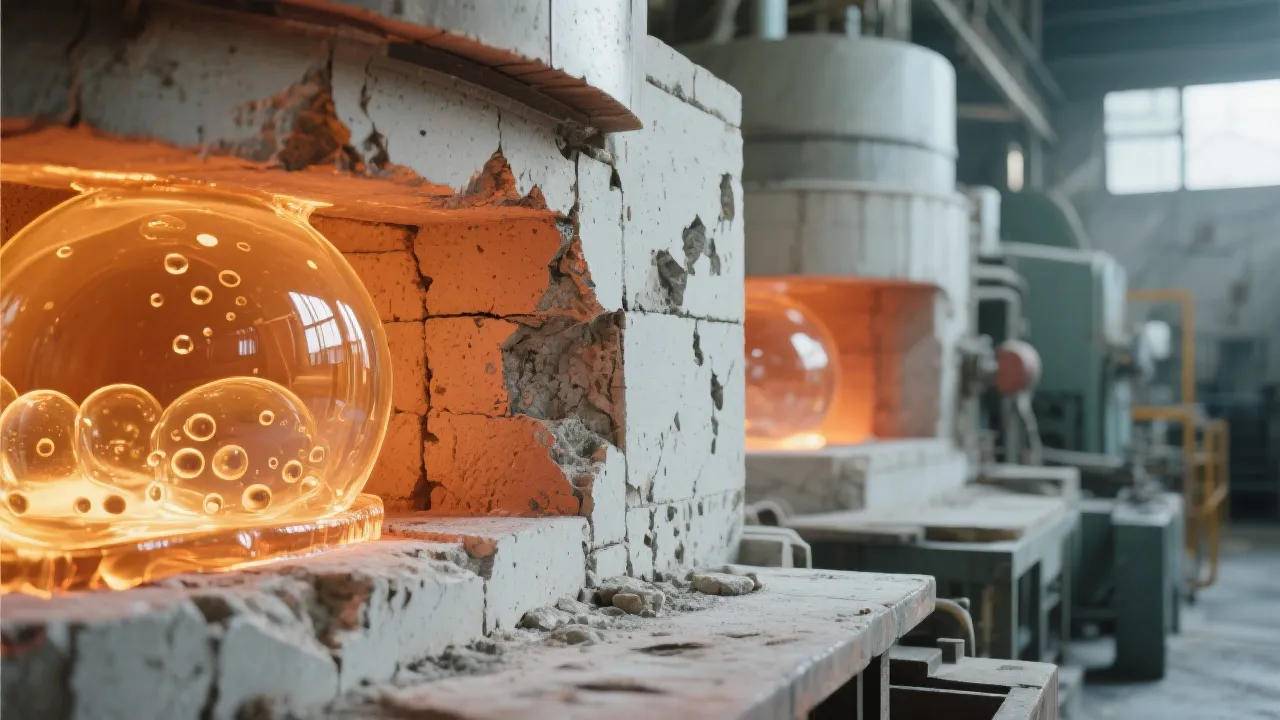
In industries like steelmaking, cement production, and petrochemical refining, refractory materials must withstand extreme thermal cycling — not just high temperatures, but rapid heating and cooling that can cause cracks or failure in less stable products. That’s where chromium alumina brick shines.
Thermal Shock Resistance: After 10 cycles of heating to 1400°C followed by water quenching, our chromium alumina bricks showed no visible cracking — a performance that exceeds ASTM C170 standards by over 40%.
Wear Resistance: With a loss rate of only 0.3% after 50 hours of abrasive testing (vs. 1.8% for standard fireclay bricks), these bricks significantly extend lining life in blast furnaces and kilns.
High-Temperature Creep: At 1350°C under 0.5 MPa load, deformation remained below 0.5% over 100 hours — outperforming many zirconia-based alternatives.
These aren’t just lab numbers — they translate directly into operational savings. For example, one European steel plant reported a 30% reduction in downtime after switching to chromium alumina brick linings in their ladle systems. The improved thermal stability meant fewer unexpected replacements and more consistent heat transfer efficiency.
Whether you're managing a cement rotary kiln, a glass melting furnace, or an incinerator, chromium alumina brick offers tailored advantages:
“We were skeptical until we saw the test reports. Now, after six months of use in our new gasifier, there’s zero sign of spalling. Our maintenance team says it’s the most reliable refractory we’ve ever installed.” – Maria Lopez, Procurement Manager, South American Refinery
If your operation is losing time, money, or safety due to refractory failure, it’s time to rethink your material choices. Chromium alumina brick isn’t just durable — it’s engineered to solve real problems in harsh environments.
Request a free sample + technical datasheet — no obligation. Let us help you reduce wear, boost uptime, and optimize your process.
Get Your Sample & Technical Guide Now


.jpg?x-oss-process=image/resize,h_1000,m_lfit/format,webp)

.jpg?x-oss-process=image/resize,h_1000,m_lfit/format,webp)